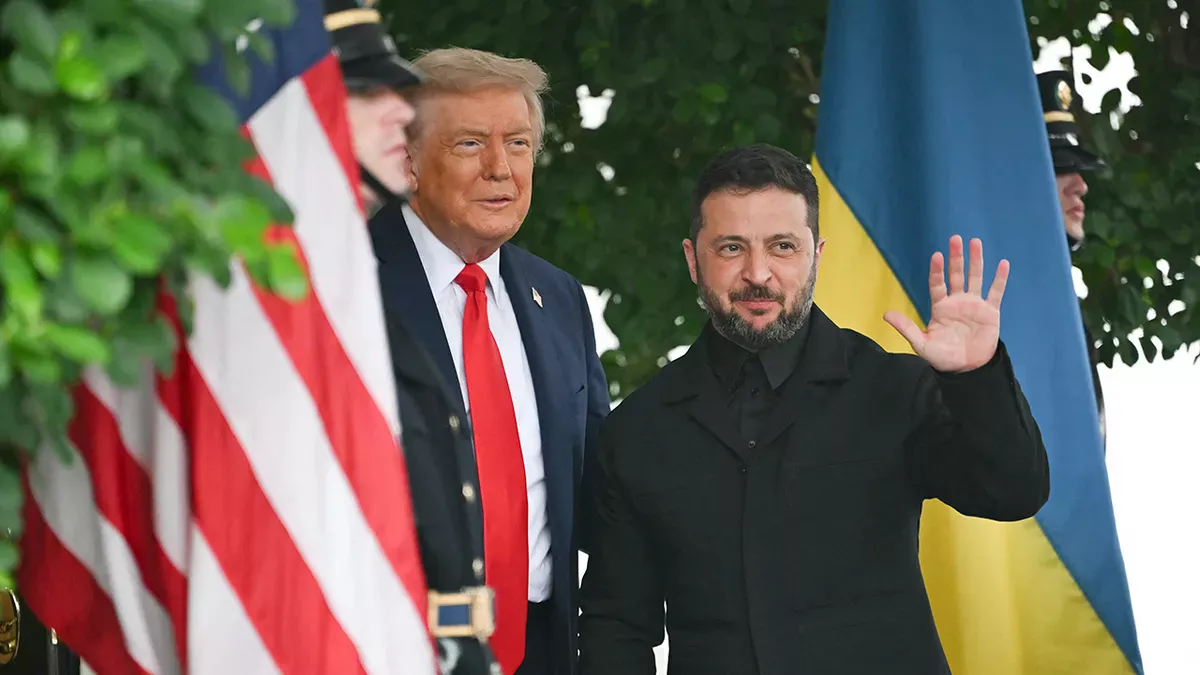
For Ukraine, the challenge of a supposed ally betraying its ideals is even starker: how to defend sovereignty when the language of power increasingly favors aggressors over victims.
By Dr. Mohammad Zahoor
For much of the past century, global leaders – especially those confronting aggression – have relied on the United States as an anchor of predictability. Even when Washington disagreed with its allies, its strategic compass was broadly understood: defend sovereignty, deter expansionism, and uphold a rules-based international order.
Today, under the presidency of Donald Trump, that compass appears not merely recalibrated – but fundamentally distorted.
For leaders across Europe, Asia, and the Middle East, operating in a world where the White House praises aggressors, undermines victims of invasion, and openly threatens allies has become an exercise in constant crisis management. For Ukraine, fighting a war of survival, the consequences are existential.
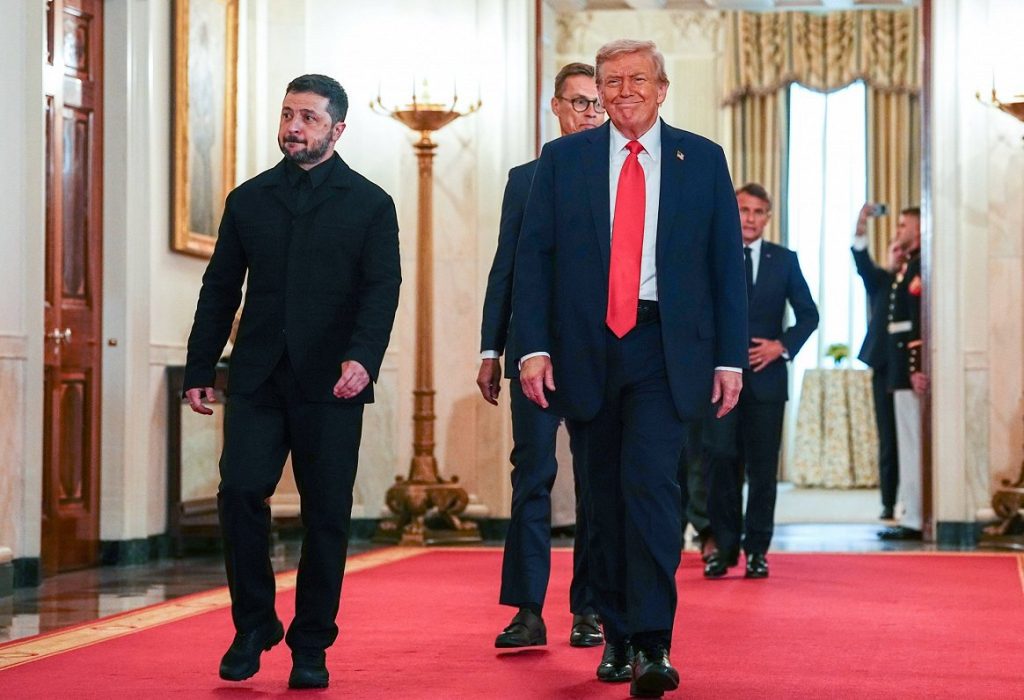
The most alarming signal has been Trump’s posture toward Russia. Despite overwhelming evidence that Moscow launched and continues to prosecute a war of aggression against Ukraine – targeting civilian infrastructure, weaponizing winter, and committing mass atrocities – Trump has repeatedly praised Vladimir Putin as someone who “wants peace,” while portraying President Volodymyr Zelensky as the obstacle. This narrative mirrors Kremlin propaganda almost word for word.
Even more troubling is Trump’s insistence on questioning Zelensky’s legitimacy and pressuring Ukraine to change its constitution to hold elections during wartime. Ukraine’s constitutional prohibition on elections under martial law exists for a reason: millions are displaced, territory remains occupied, and soldiers are fighting at the front. Demanding elections under these conditions is not democratic idealism – it is strategic blindness.
At no point has Trump applied comparable pressure on Russia to withdraw from occupied Ukrainian land. Instead, his rhetoric increasingly suggests that peace requires Ukraine to surrender territory to its aggressor. This is not diplomacy; it is capitulation dressed up as pragmatism.
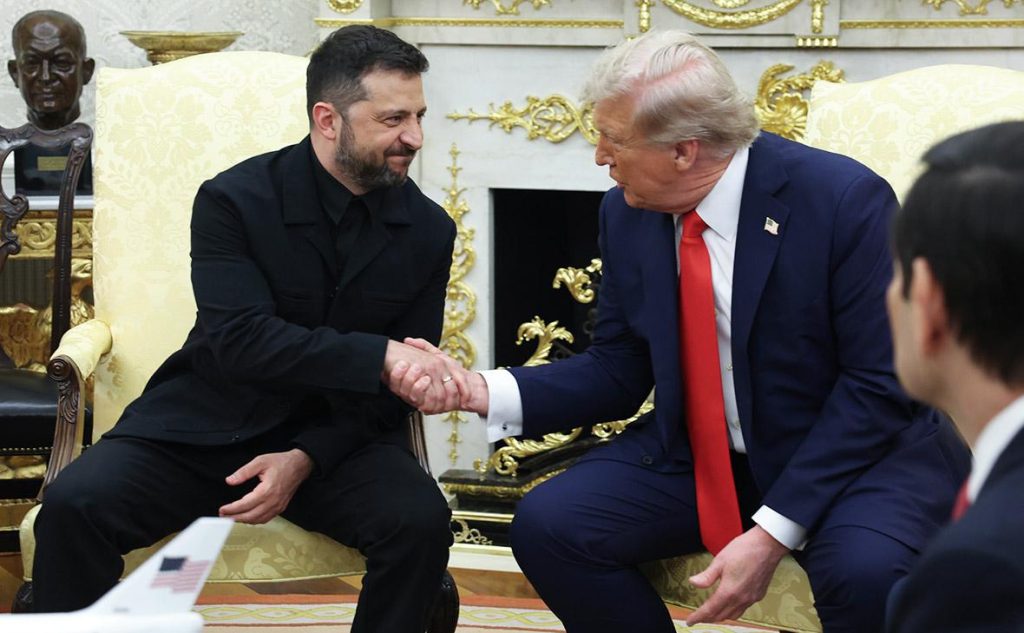
The contradiction deepens further. While publicly framing himself as a peacemaker, Trump has reportedly invited Vladimir Putin and Belarusian dictator Alexander Lukashenko to participate in a so-called “Board of Peace” related to Gaza. The symbolism is staggering: two authoritarian leaders – one actively waging a war of conquest in Europe, the other a long-time enabler – being elevated as arbiters of peace.
For Ukrainians freezing under Russian missile attacks on energy infrastructure, this is not abstract geopolitics. It is a message that accountability is optional and aggression negotiable.
The inconsistency does not stop there. In Latin America, Trump has flirted with declaring himself the effective political authority over Venezuela, while quietly sidelining the democratic opposition that actually won elections – apparently in exchange for oil concessions. In Iran, he has openly called on citizens to rise up and seize cities, promising US support.
And now, Europe faces an unprecedented shock: Trump’s renewed threat to annex Greenland.
What once sounded like an off-hand joke has evolved into explicit rhetoric, accompanied by threats of tariffs against countries that support Denmark and Greenland’s sovereignty. Several NATO members have sent small troop contingents to Greenland as a signal of solidarity – only to be mocked and economically threatened by the very alliance leader they are meant to trust.
This is no longer mere unpredictability. It is the active erosion of alliance credibility.
NATO’s strength has never rested solely on military hardware; it rests on trust. When an American president threatens an ally’s territory while demanding loyalty elsewhere, that trust fractures. Moscow and Beijing understand this perfectly. Nothing serves revisionist powers better than a divided West unsure whether its leading member still believes in collective defense.
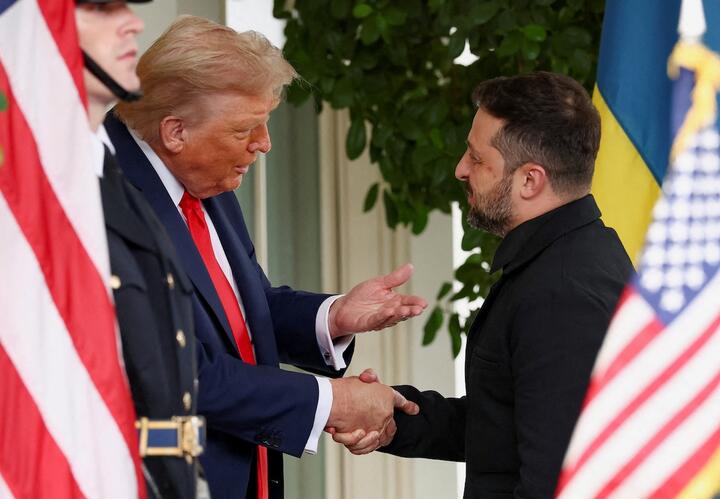
Meanwhile, global forums like Davos – once platforms for economic coordination and post-conflict reconstruction – are increasingly dominated by discussions of military escalation, deterrence, and crisis containment. That shift is not accidental. It reflects a world struggling to adapt to leadership vacuums and policy whiplash emanating from Washington.
In this atmosphere, Ukraine’s struggle risks being overshadowed – not because it has become less urgent, but because it competes with the gravitational pull of Trump’s ego-driven geopolitical theatrics. The annexation fantasies, tariff threats, and diplomatic reversals consume attention that should be focused on stopping Europe’s largest war since World War II.
For global leaders, navigating Trump’s presidency has become a delicate balancing act: how to maintain relations with the United States while quietly preparing for the possibility that American commitments may no longer be reliable. For Ukraine, the challenge is even starker: how to defend sovereignty when the language of power increasingly favors aggressors over victims.
History will judge this moment harshly if appeasement is once again mistaken for peace. The lesson of Ukraine is clear and painfully earned: wars do not end when democracies pressure the invaded to concede; they end when aggressors are compelled to stop.
The world’s leaders understand this. The question is whether the leader of the free world still does.